
High Anchor Placement
At the crux of current and future canyoneering practices

What do these things have in common?
Clean rope pulls vs. Dirty rope pulls
Potential injury or rope failure due to factor falls
Adjustable lanyards
Building and operating rope systems with no slack
Answer: They all become relevant when you place high anchor placement points, or low anchor points.
Keep them High
What is a high anchor placement? In short, a placement that is about head high, or higher. High enough that there is no slack in your safety tether when you are clipped to the anchor, and no slack when you rig your rappel device and transfer your load to the anchor.
With such placement, you get cleaner rope pulls, you minimize or eliminate fall factors, and when you build systems and operate them, it is easier to eliminate slack.
Once you factor anchoring placement opportunities near the edge, quality of the available rock, it may not be possible to get perfect ideal placement, but you need to start with a list of goals.
Why it has become important to eliminate slack from rope systems?
Because of the new found preference of hyperstatic ropes, and the findings that some semi-static ropes do not have enough elongation, or enough rope in a system, to effectively eliminate shock loads of factors 0.3 to 1.0
Power Drill vs Hand Drill
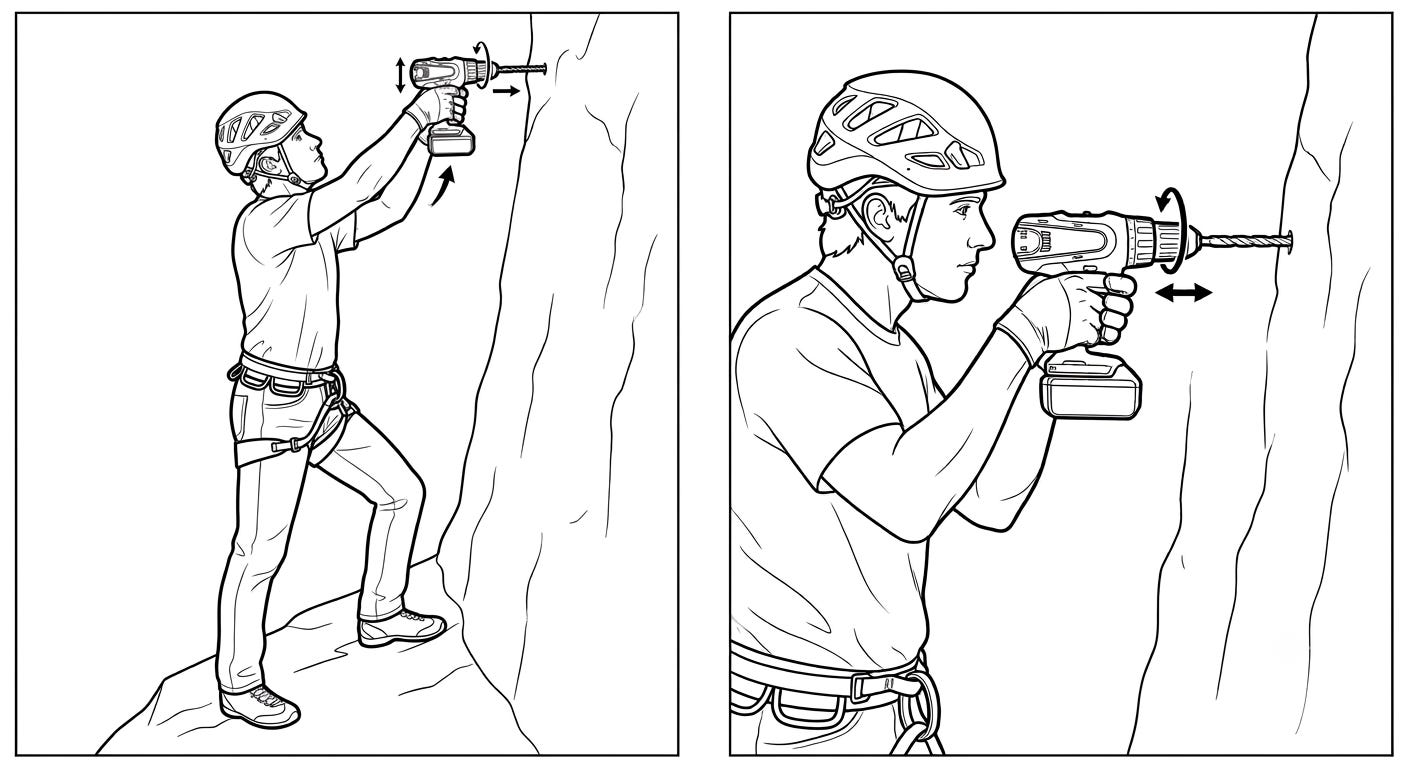
One significant hurdle to place anchors head-high or above, is the limitation imposed by land manager rules of “no power tools”. This leaves the option of hand operated drills that loose operating leverage and precision when you extend your arms. With a power drill, you can extend your arms and use the power tool to get to a wider range of ideal placements.
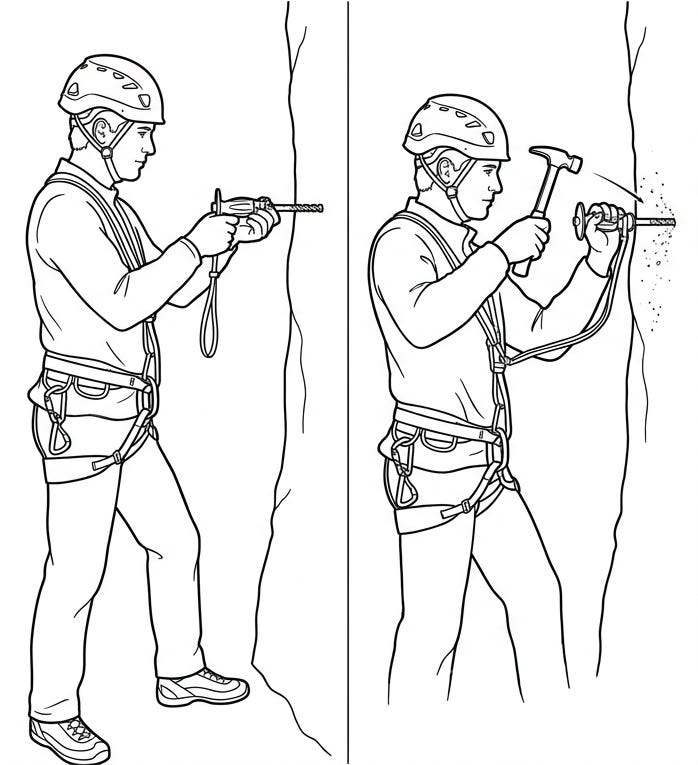
It may be tempting to select a spot for hand drilling where you can comfortably use your upper body leverage to operate the drill and the hammer.
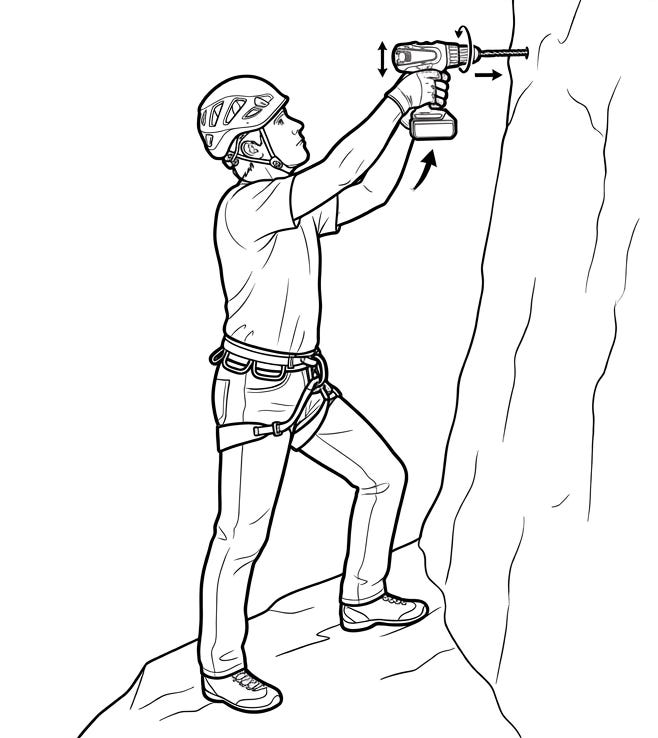
A power drill will give you more options to go higher, and still achieve a clean installation.
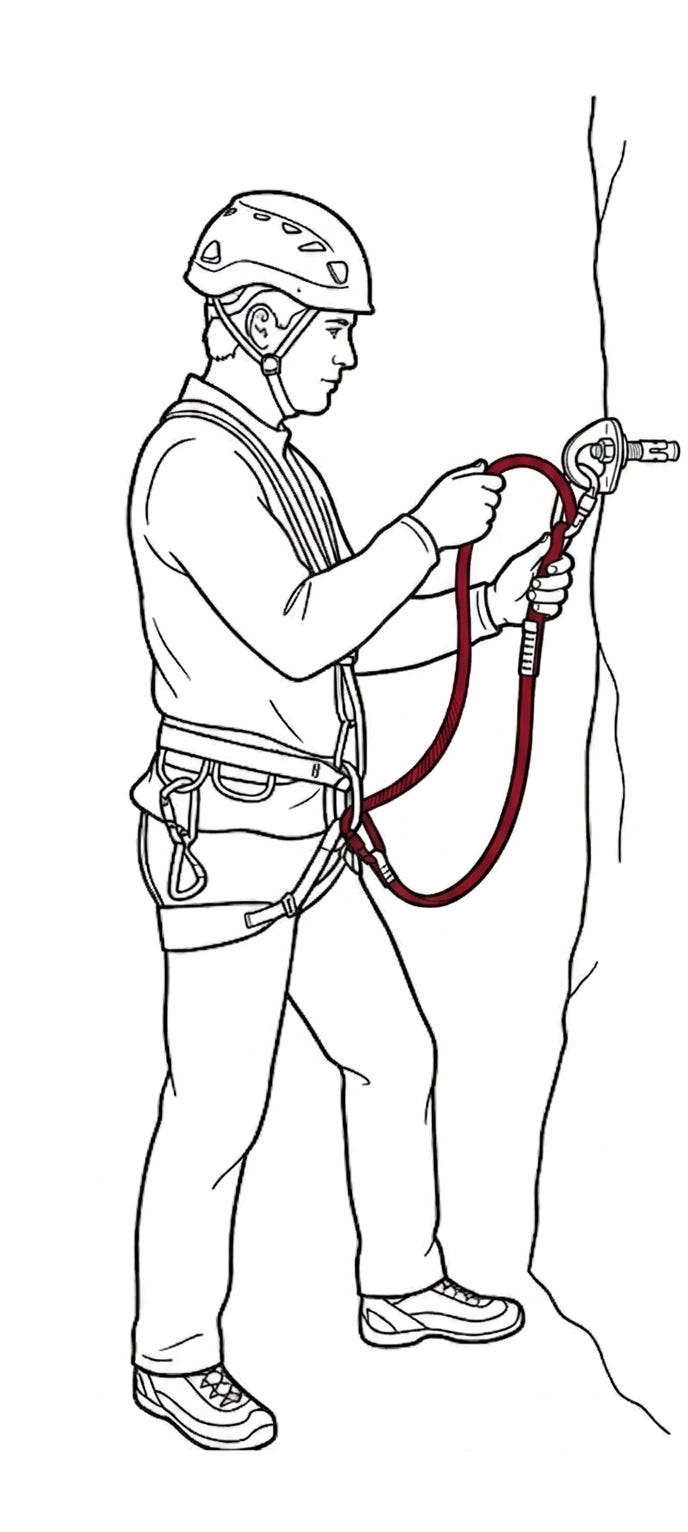
A low anchor point(s) may result in slack on your safety tether, and slack on the rappel rope once you rig your rappel device.
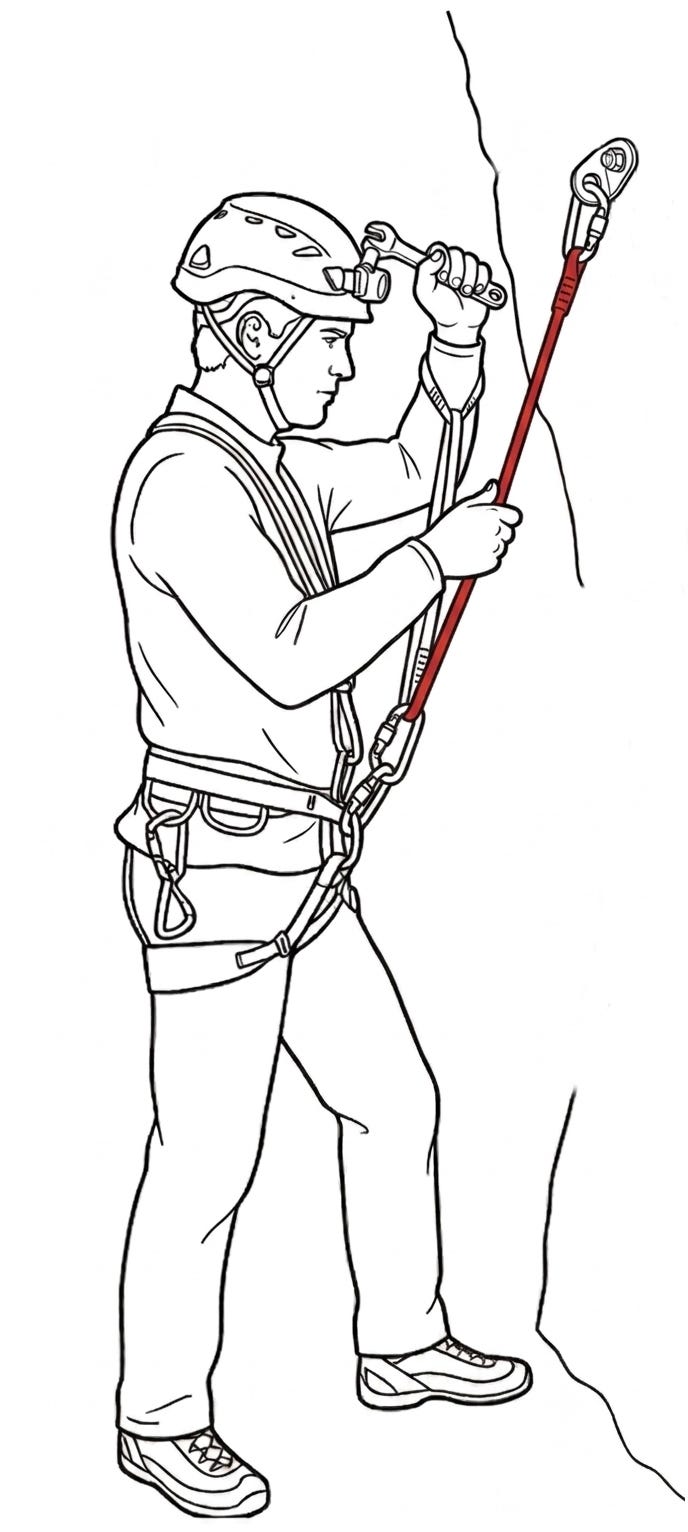
A higher anchor point(s) result in a tensioned safety tether, and tensioned rappel rope once you rig your rappel device.
Take Control
You can not rely on perfect anchor placements to avoid slack in rope systems that lead to potential fall factors. Take control of the slack in systems with adjustable safety tethers, cows-tails, leaning or bending knees, lower stance, etc.
RTL Belays
If you are belaying a partner on a Retrievable Traverse Line, learn to keep a slack-free line to protect your partner from a fall factor.
Hyper Static Ropes vs. Semi Static Ropes
In a recent FIC - Federation Internationale de Canyonisme test of several popular ropes in these 2 categories, it was found that even a 0.3 factor fall resulted enough shock load to result in injuries. Even the semi-static ropes did not have enough rope length to significantly absorb fall factores between 0.3 and 1. Detailed results in a future post.
These preliminary results point back to the importance of build and operate rope systems with minimal or no slack. High anchor points greatly help in this area.
Canyon Stewardship
Before getting ideas about placing bolts in canyons, learn thoroughly about rigging systems at all level of canyoneering practices. Take a class, take an assessment. Some related reading here:
Canyon Stewardship Gone Wrong

A subscriber of this Substack suggested the title and subject for this installment. Thanks JC 🙂