
Canyon Stewardship Gone Wrong
When good intentions can not overcome bad culture and bad policies. Not yet...


A subscriber of this Substack suggested the title and subject for this installment. Thanks JC 🙂
“Stewardship is the careful, responsible, and ethical management of resources, assets, or responsibilities entrusted to one's care. Rather than ownership, it focuses on acting in the best interest of others, future generations, or the environment.”
Can you spot in this definition of stewardship the source of endless canyoneering discord in the American SW? “…acting in the best interest of others“
“Others” may want no bolted anchors and practice higher risk anchoring practices.
“Others” may want bolts to preserve the natural beauty of canyons
“Others” may want bolts just to perform longer, higher rappels.
“Others” may not want bolts to keep newcomers out of canyons.
Now, can you spot the only objective non conflictive part of the definition? “…or the environment”
Old Guard Notions of Canyon Stewardship
In the American SW, for the last decade or so, canyon stewardship has meant:
Cleaning webbing tat from natural anchors
Reporting new bolts and chopping them to enforce ‘ethics’
Every newcomer to the sport, at some point developed awareness of some sort of back room shadowy old guard attempting to translate trad-climbing ethics and some quixotic vision of everybody entering the sport ghosting everything (“Mainstreaming Ghosting”), chopping bolts, and chastising bolting proponents. The result? Massive damage on canyons in the form of rope grooves.
Hypocrisy
It was not so hard to find out that the same people chopping bolts in one canyon, and chastising bolting proponents, were placing bolts themselves in other canyons. The diatribe of LNT and anchoring ethics, through the years, left a real bad aftertaste for anyone trying to make sense of this “culture”. No rime or reason. No credibility.
New Gen Notions of Stewardship
Eventually, the weight of reality sunk in, and bolts appeared and prevailed in communities around the American SW. Some installed by comercial guides, other by the anti-bolts and bolt-choppers themselves, but more importantly, the vast majority installed with little sense of standard canyoneering rigging practices for clean pulls and group safety, again resulting in stuck ropes and rock scarring.
Some moved to see stewardship primarily as canyon preservation. Prevent, mitigate or stop canyon damage.
Others, moved to see stewardship as an opportunity to become notorious in a given community. Fixing problems that did not exist, opening alternate access to established routes, or just bolting for the sake of it.
I suspect that the old guard of anti-bolt, turned only-bolting-when-and-where-I-say-so were afraid of this outcome: Just bolting for the sake of it. So in this regard…they were right to be afraid.
All in all, no matter the new interpretations of canyon stewardship, it’s a step forward from pretending that everything should be ghosted, and LNT means “no bolting”
For some in the SW, it has been hard to understand that once a canyon gets above certain amount of traffic....the best way to protect it is: Decommission natural anchors, and move to properly located bolting.
Also, it happens to be a very objective way to make decisions about when and how to bolt. Bolt type, location, station configuration, all based on sustainability and canyon protection/preservation
Letter of the law
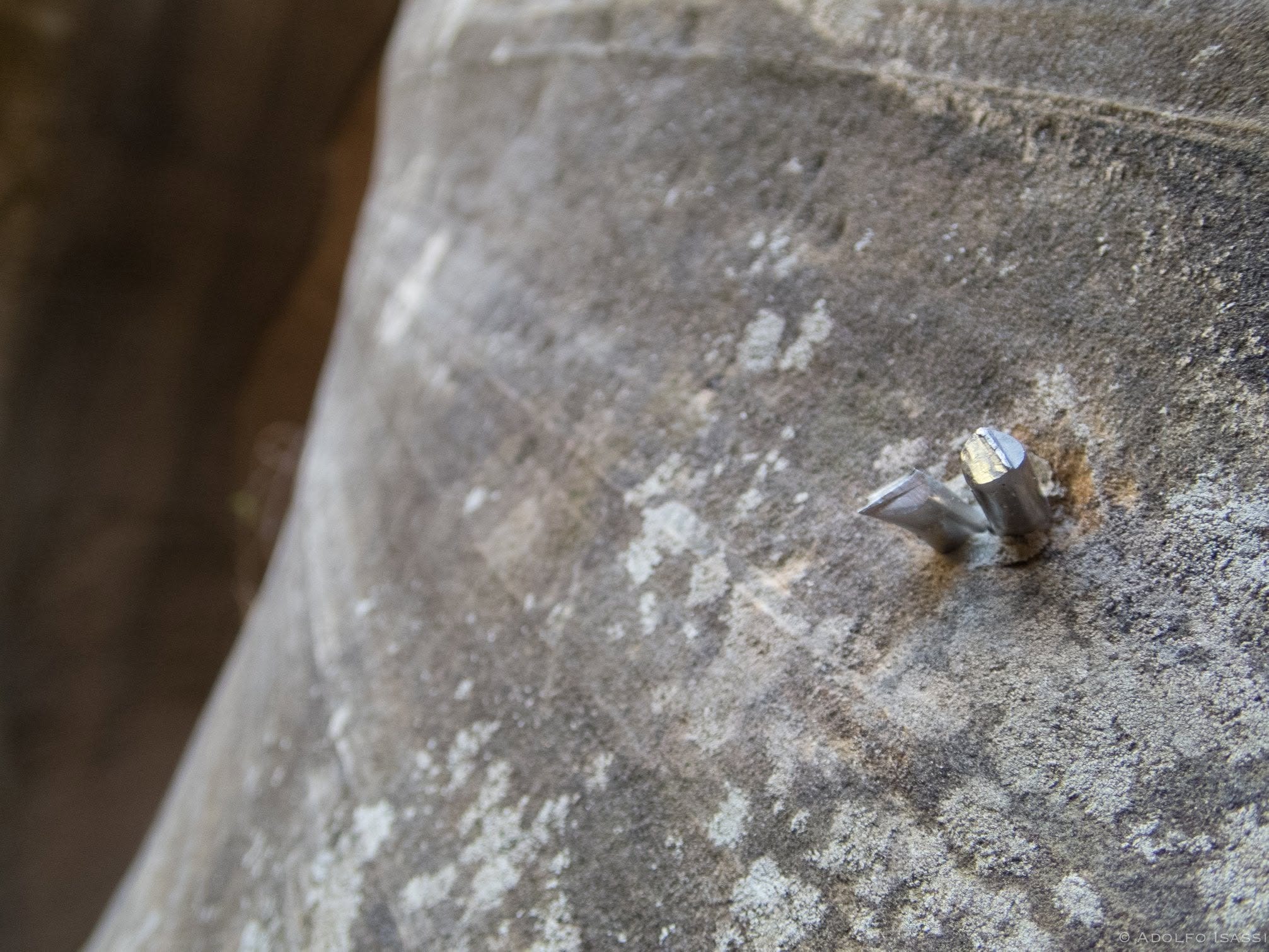
“Preserving Wilderness Character” by prohibiting “Permanent Installations” unless is “necessary for safety reasons” has been interpreted in many ways to fit both pro-bolt, and anti-bolt proponents. The result? Anonymous bolting, and vigilante bolt-chopping: “Bolting Wars”. More canyon damage.
New Disagreement
Now, disagreements have moved from “Bolting vs. No Bolting” to “How to go about bolting”. The intersection of laws and regulations and bolting has been dominated by the specifics of rock-climbing.
Bolting with a purpose
Hopefully communities will build on to of this new awareness and decide what they want to prioritize:
Preserve a tradition
Canyon conservation
Establish an alternate entrances to canyons
Just to do a longer rappel for fun
But not for notoriety….
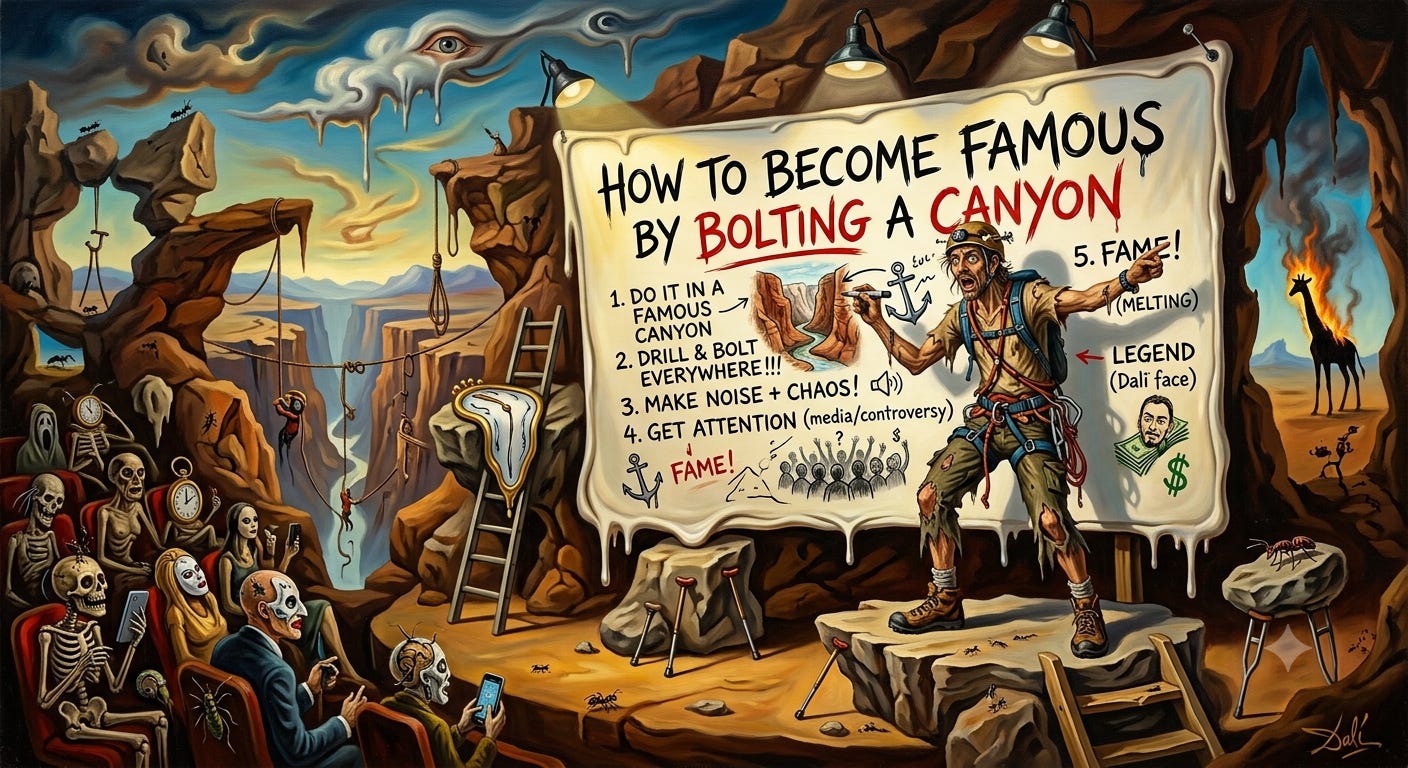
But who, knows. Maybe the old guard can extend their “only when and where I say so” by teaming up with the newcomers, looking for fame or acceptance.
Glimpse of an ideal world
Imagine a canyoneering community in a beautiful region where canyons are being taken care of by locals that are trained and qualified not only to perform explorations of new routes, but how to and equip them, document them, and lead them for sustainability, preservation and safety. And these projects, are not some personality based cult type thing, or a hidden politics, but a organized club or community connected with local land managers and maybe even SAR teams. Such world(s) exist. Just not here in the USA. Not yet….
Further reading….
