
Understanding Long Rappel Risks
And how to mitigate them

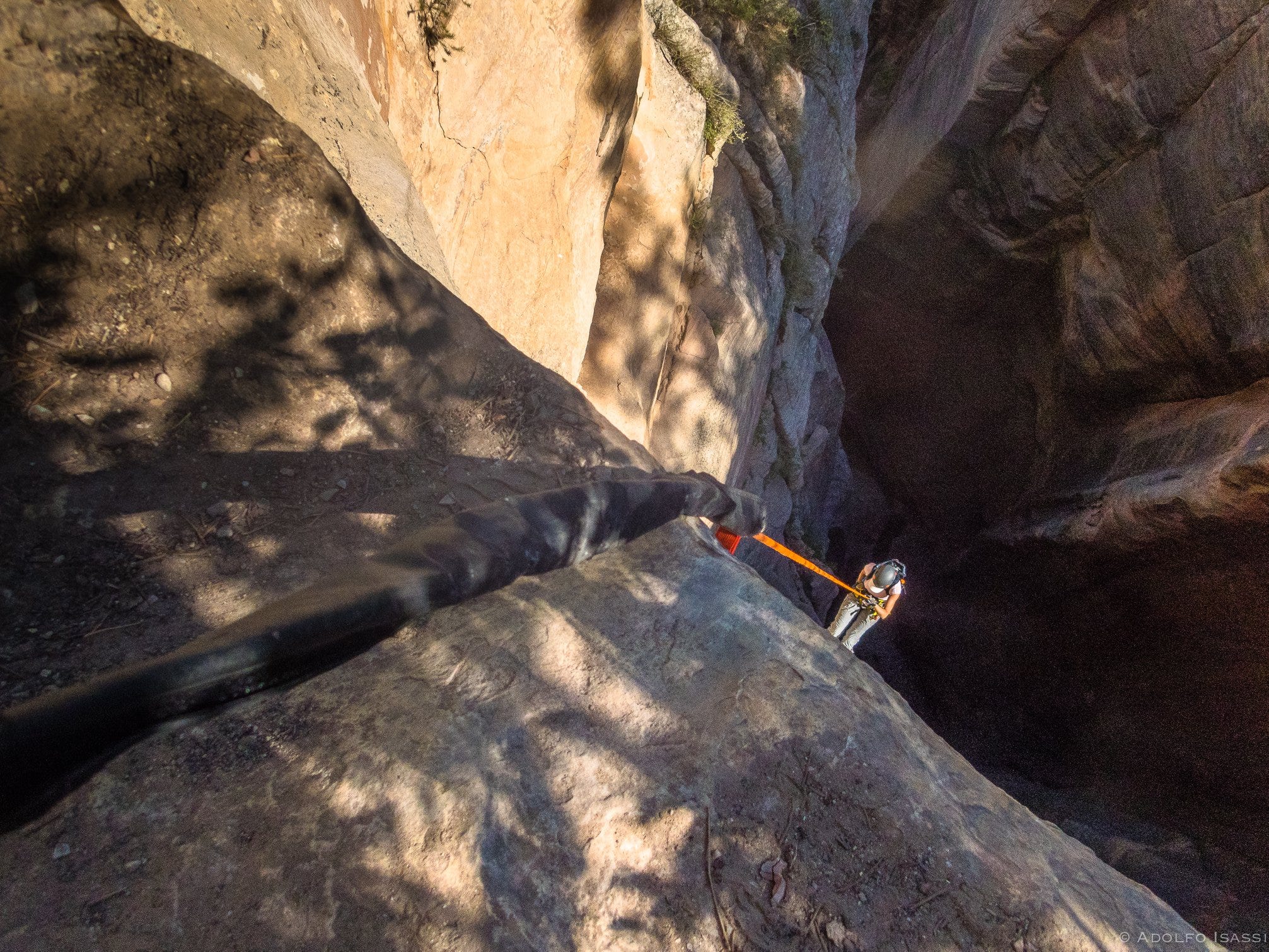
What constitutes a long rappel?
Nowadays, given the current rope diameters and rappel devices, you can start feeling the effects of a long rappel somewhere past 250 feet. Probably years ago when 10-11mm rope diameters were the norm, long rappel effect was on shorter pitches.
Long rappel effect: Is there a way to know?
When you step to the rappelling station to rig your rappel device, if you struggle to lift the rope and thread it through the rappel device because of the rope’s weight, chances are that you are going to encounter the “long rappel effect” i.e variable speed during the rappel.
What makes long rappels special or more dangerous?
In two words: Controlling speed. During shorter rappels, you can rig a level of friction on your rappel device, and that friction will work OK from the start of the rappel, to the end of it, when you reach the ground. On long rappels, you will feel that you have way too much friction at the start, and gradually, the friction becomes adequate, and later becomes too little, and hard to control. There are many accidents caused by failing to control speed during a long rappel.
Accidents
Just a couple of examples of accidents involving long rappels.
Why?
The weight of the rope below your rappel device.
If you are familiar with the concept of a bottom-belay (fireman’s belay), you can see how the weight of 300’ of rope below your rappel device is actually giving you a bottom-belay. But as you move down the rope, that bottom-belay diminishes, as you have less weight of rope below you, and you gain speed. The thicker, wetter, the heavier rope, the more pronounced you will feel this variable bottom belay effect.
What is the solution?
Variable friction on the fly on your rappel device during the long rappel.
You start with little friction at the edge, then you add some more mid rappel, and as you past the midpoint or 2/3s of the pitch, you add even more friction.
“Modern” Rappel Devices
If you started canyoneering in the last 10, 15 years, you are familiar with these 2 features on horned rappel devices:
Initial Friction settings. Usually 3 friction settings that you can not change once you start: Low, Mid, High friction settings.
Friction on the fly settings. Friction that you can add or subtract as you move down the rope to control your speed. Usually loops around legs/arms/horns of your rappel device.
What canyoneers did before horned modern rappel devices?
Figure 8’s on Vertaco mode. With this mode, the angle of the rope leaving the figure 8 carabiner acts as a variable brake.
Breaking carabiners: Leg loop + lower carabiner redirect. This results in a similar Vertaco rope angle effect and adds another point of friction.
For really long rappels, some people switch to caving-racks.
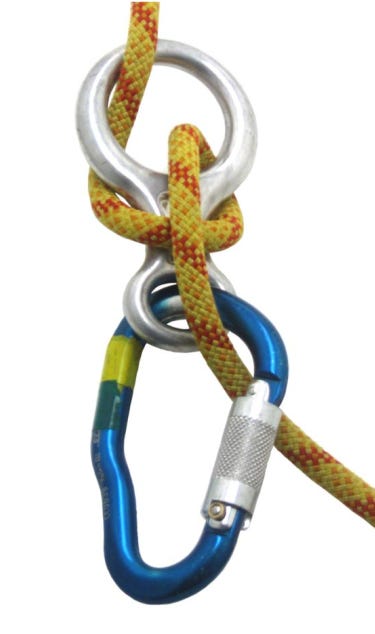
Figure 8 vertaco mode
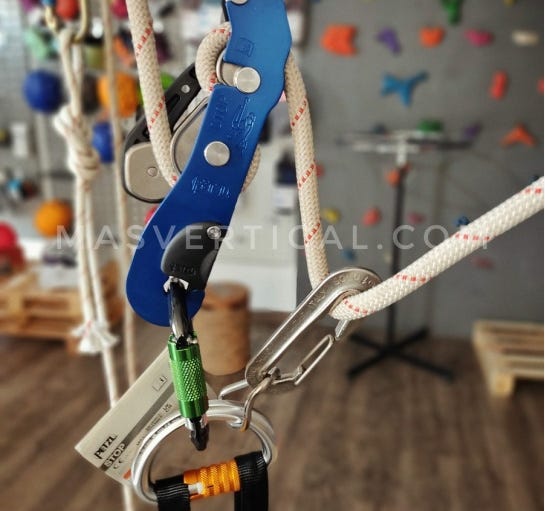
Special breaking carabiner: Raumer Handy
What other factors can result in changes of speed mid rappel?
A transition from rappelling on a wall to an overhang.
Something or someone giving you a bottom belay. Excess rope at the bottom snagging on a rock or a branch, can result in a bottom belay as you get closer and create an angle.
Are self-belays a good idea on long rappels?
A self belay (prusiks below or above the rappel device) will add another variable to manage. Make sure that the risk you are trying to mitigate with a self-belay is greater than the risk you are introducing by installing one. Bottom belays are effective on long rappels if performed properly.
Should you hang your pack on long rappels?
Hanging your pack is more a matter of your avoiding your abs getting tired, or struggling from keeping yourself upright. This tends to happen more on free hangs where you do not have your feet on a wall. If you are “top heavy” and face a long free-hanging rappel, and you have a heavy pack, consider hanging it in a way that does not get tangled around the rope below you, and it does not interfere with your self-rescue gear, especially your cows-tails.
Other related risks
Other than the rappel-effect and controlling speed, there are other risks, and documented incidents related to long rappels.
Rope twists creeping up from the bottom of the rappel, and getting rappeler stuck mid rappel. This is caused by throwing too much rope down, or the rope bag down. Rope twists do not have a way out at the end or the rope, and they start traveling up rope towards the rappeler.
Some people set rope length to avoid this hazzard.
Some use devices like racks that do not produce rope twists.
Some modify the rappel device with “brake carabiners” to mimic a rack and avoid rope twist.
Be prepared
Practice playing with on-the-fly variable friction with your current rappel device.
If you need gloves because your hands are getting hot due to gripping the rope hard to control speed, you are not setting enough friction on your rappel device.
On long rappels, your rappel device will get hot. Use those gloves to handle that hot device.