
Toggle Stick Best Practices
Transient Rigging (TR) Series:

Popular
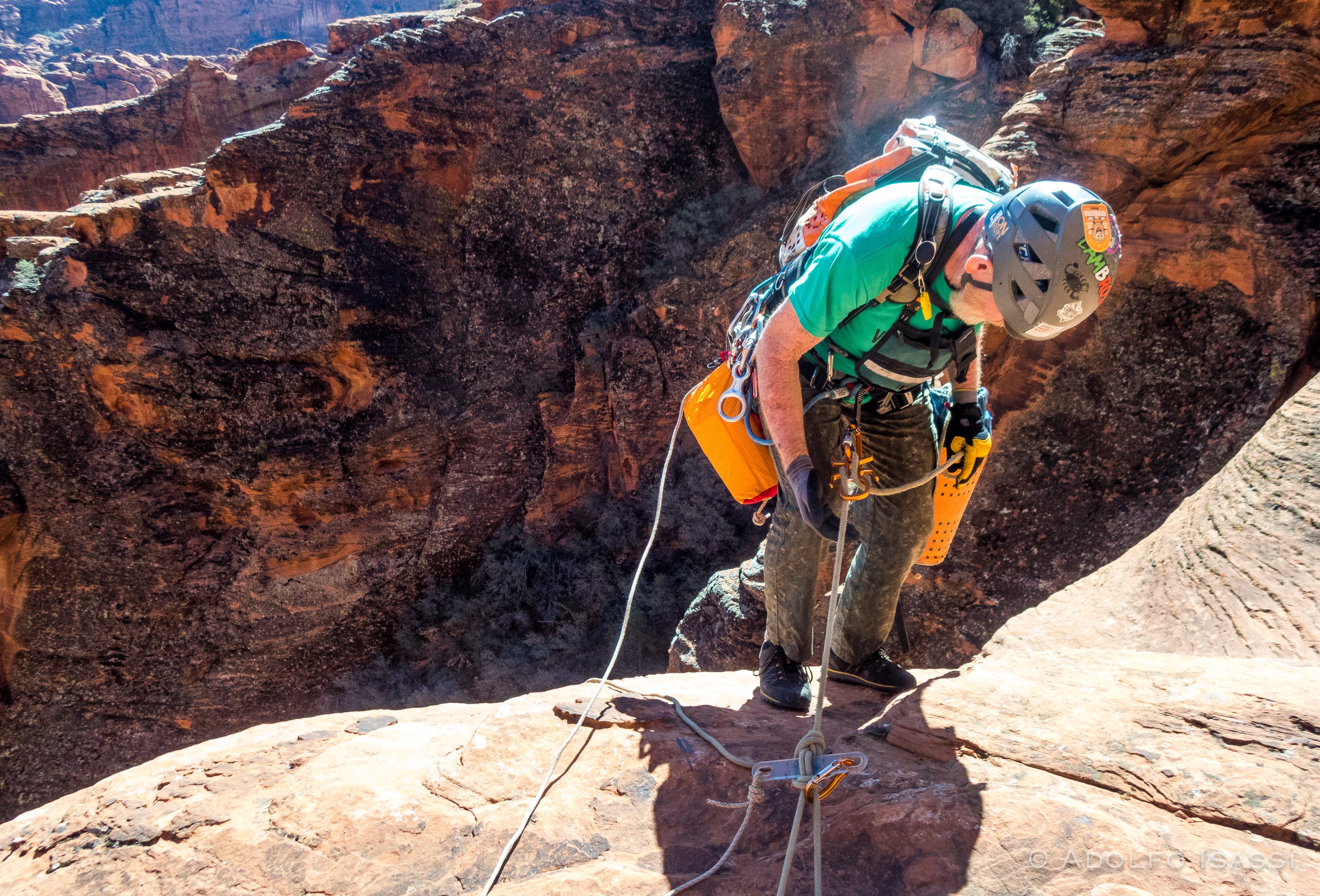
Toggle plastic sticks are probably the most popular modality of TR across the USA SW communities. Gear based solutions remove the adoption friction created by learning knot craft. With toggle sticks, the knot craft bar is very low.
Purpose
Depending on the community or area, the purpose for any TR modality may vary.
For remote routes, with no bolting, and scant natural anchoring opportunities, toggles are a popular choice. But even when rocks or bushes are not an option, Transient Rigging is no longer useful, and things move towards Transient Anchors.
In routes with publicly available beta and more traffic, where natural anchors are far back from the edge, and rope pulls are difficult, rope recovery and rock scarring prevention is achieved by TR.
Unstructured training tends to follow a pattern of “One tool for everything”, so people who see TR as an advanced tool, adopt it as a default for every situation. So you may see TR used where it is not necessary at all.
Risks
In canyoneering, best practices are based on risk mitigation. “Sequencing” is a tool and concept central to mitigating risks. Toggle sticks are a high risk practice:
Someone on your team will be rappelling on an open system (a system that can become unintentionally undone).
It’s a static system, with no immediate lowering capabilities
It’s a tails-up system. So no reserve rope to convert to lower unless proactive defensive measure are taken.
Best Practices
So you and your team can use Sequencing to keep risks to a minimum.
Designate a LPAR (Last Person At Risk) team member that is competent at rigging and rescue.
Use a pull cord that can double as rescue/lower cord, or actual rope.
Rig releasable for your team to establish safe rope length.
Convert to TR for the last 2 team members
Close the system
Second to last goes down with the pull cord on a closed system
Second to last keeps the pull side safe and away from LPAR
LPAR goes down on an open system
LAPR may implement a technique to convert to a semi-open system if required.
Self Rescue
Good friend and Canyon Guides International Pro Guide Shane Wallace commented that a good idea to add to these Best Practices: Make sure that the last 2 team members going down on a tails-down-static system need to have solid self-rescue skills:
Stop and lock-off rappel device
Install rope-grab above rappel device
Clip-short
Fix problem/pass knot/convert to ascend
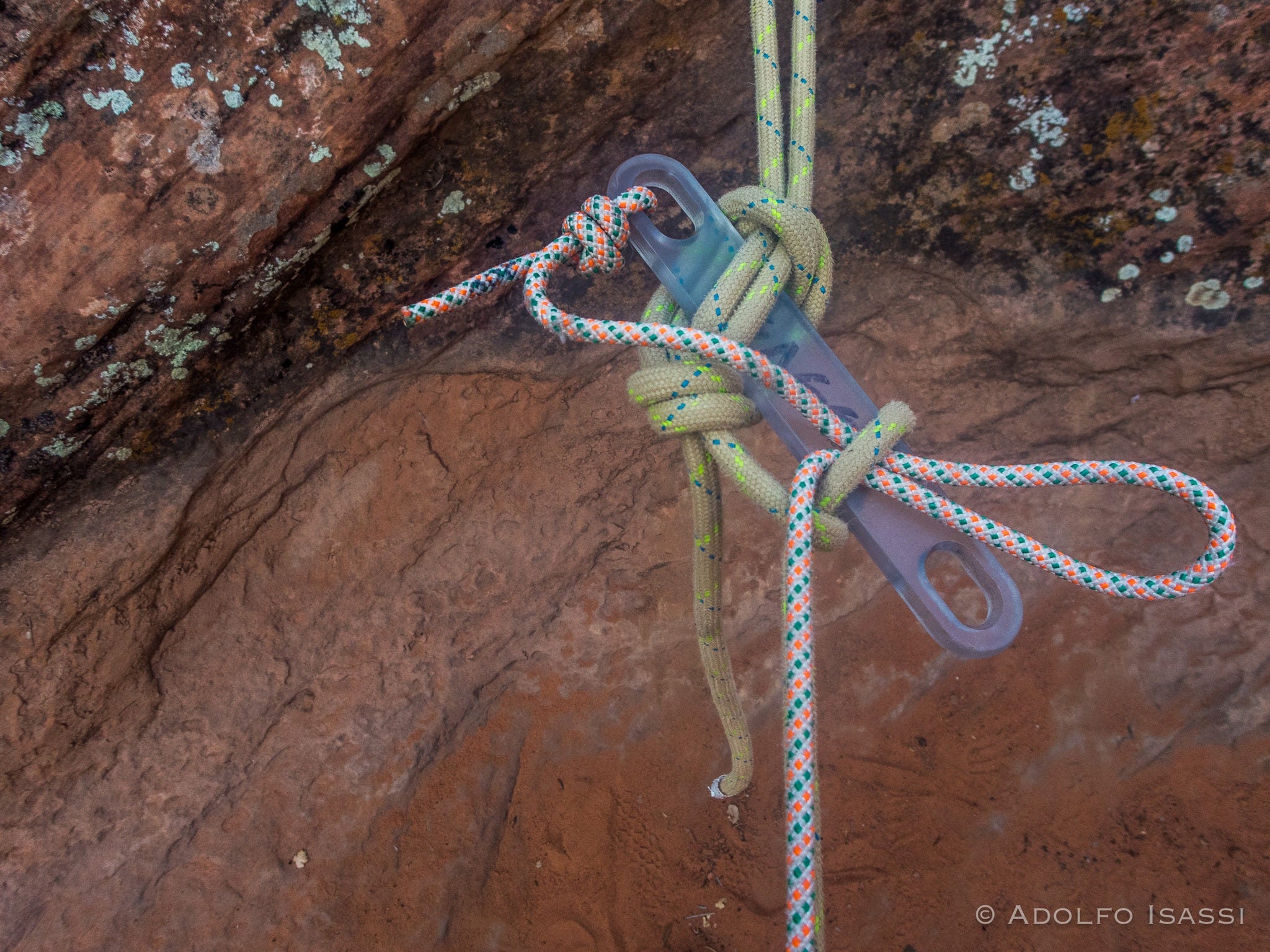
Semi-Open
Semi Open safety systems are ways to rig the toggle stick for LPAR. These Semi Open systems give LPAR an extra layer of safety to prevent accidental pull cord premature release.
Semi-Open implementation with a daisy chain.
Beyond toggle stick conversions: TRR
Transient Releasable Rigging (TRR) aims to eliminate the conversion from Releasable to Transient for the last 2 team members. Gain in efficiency, but it may be a high bar for rope work challenged individuals.
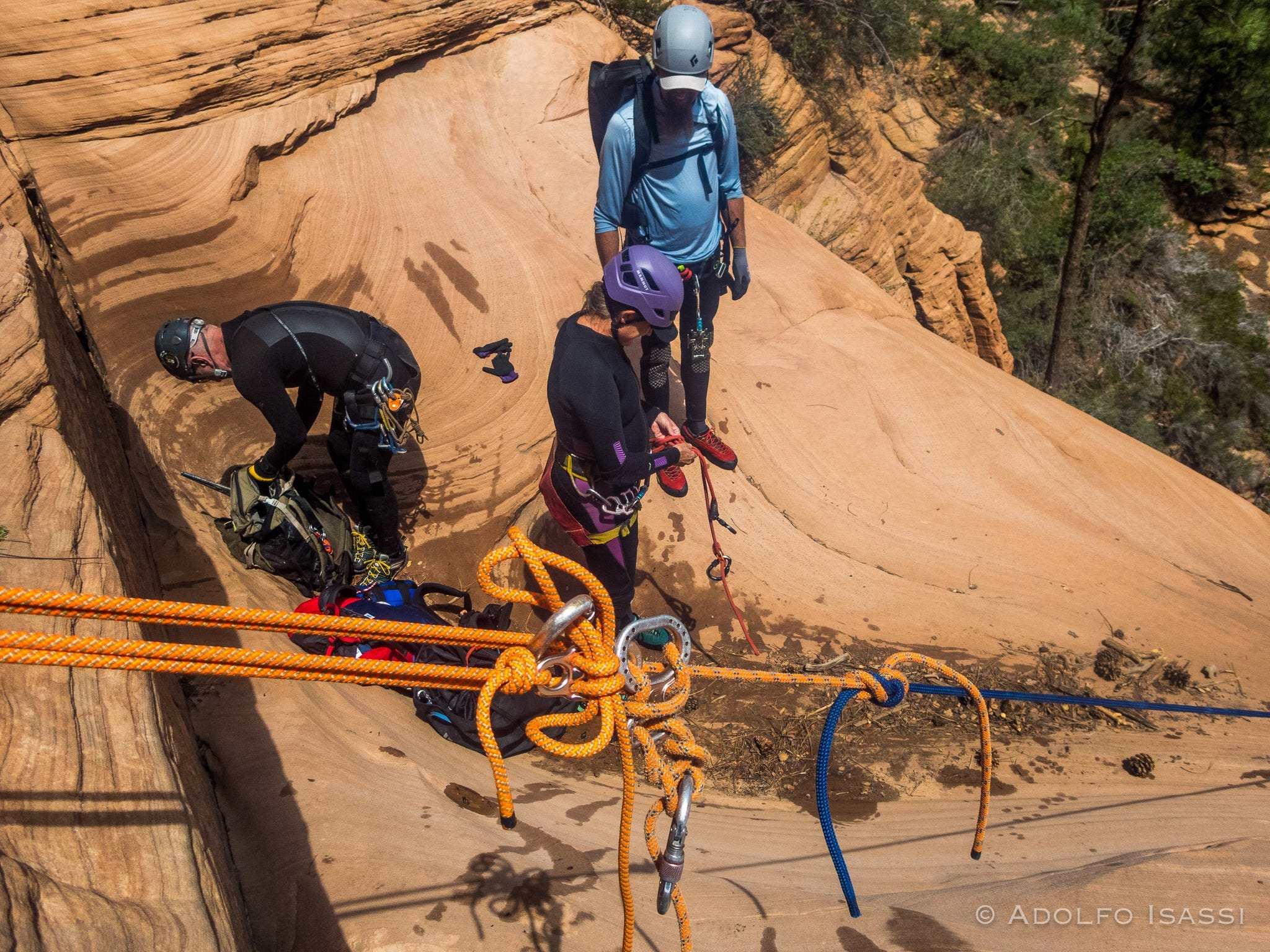
Video of TRR plaquette retrieval.
Have fun and be safe!